Holographic Particle Velocimetry via Gaussian-Parameterized Particles (Feb 2026 - Present)
Undergraduate Researcher | Computational Imaging Lab, UC Berkeley
Advised by Dr. Nalini Singh & Mingxuan Cai & Prof. Laura Waller
Publication: Taige Yang, Nalini Singh, Mingxuan Cai, and Laura Waller.
“Holographic Particle Velocimetry via Gaussian-Parameterized Particles.”
21st International Microscopy Congress (IMC21), 2026.
Details
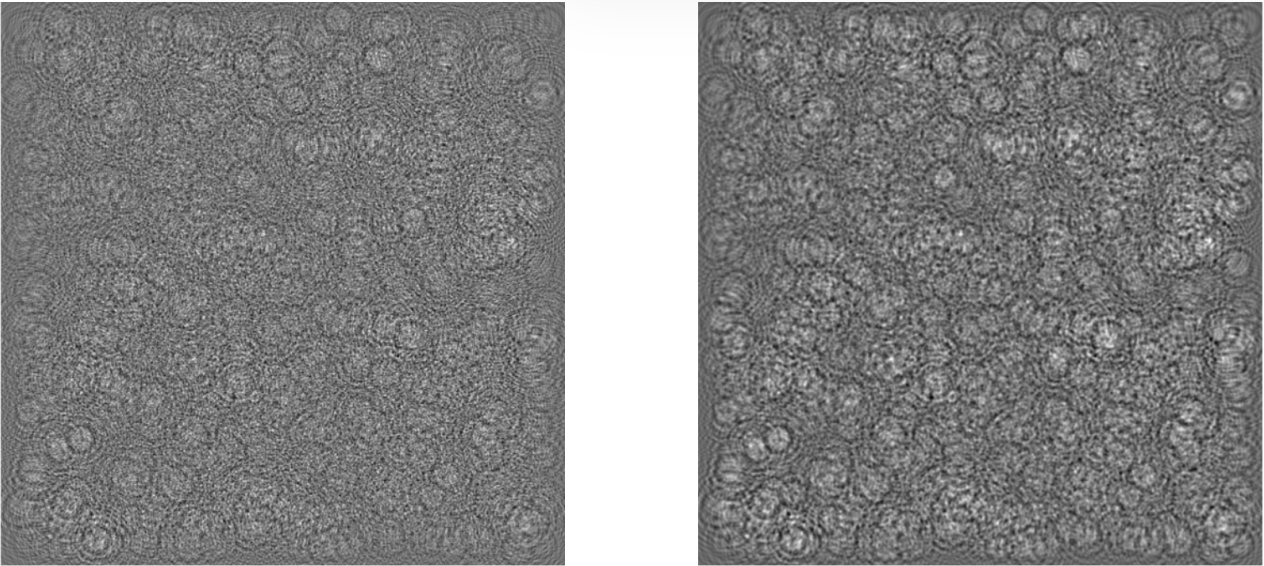
- Lagrangian Representation: Departed from traditional grid-based views by adopting a Lagrangian perspective, using precise floating-point coordinates to represent individual particles for off-grid trajectory tracking.
- Forward Modeling: Developed an analytical forward projection model to optimize optical kernels, improving the fidelity of in-line holographic reconstructions.
- Hybrid Initialization: Implemented an Angular Spectrum Method (ASM) combined with Gaussian representations for robust particle localization.
- Physics-Informed Neural Field: Represented complex velocity fields using Multi-Layer Perceptrons (MLPs) to regularize ill-posed inverse problems in fluid dynamics.
- Pipeline Engineering: Built an end-to-end pipeline integrating particle localization and 4D flow field reconstruction.
Zero-Day Vulnerability Detection via Revelio (Mar 2026 - Present)
Research Assistant | Sky Computing Lab, UC Berkeley
Advised by Yiwei Hou
arXiv · Full blog · Twitter · Sky Project
Details
- Framework Evaluation: Benchmarked the Revelio framework’s efficacy in detecting memory vulnerabilities within the V8 JavaScript engine, libtorrent, etc.
- Environment Orchestration: Engineered Dockerized fuzzing environments leveraging OSS-Fuzz and an array of LLVM sanitizers (ASan, MSan, UBSan) to ensure comprehensive detection of memory errors and undefined behaviors.
- PoC Analysis: Analyzed LLM-generated Proof of Concept for zero-day vulnerabilities to assess the precision of agent-based security auditing.
Sleep Stage Classification via Mouse fMRI Signals (Aug 2024 - Nov 2025)
Undergraduate Researcher | Translational Neuroimaging Lab, ShanghaiTech
Advised by Prof. Zhiwei Ma & Yiyun Qi
Details
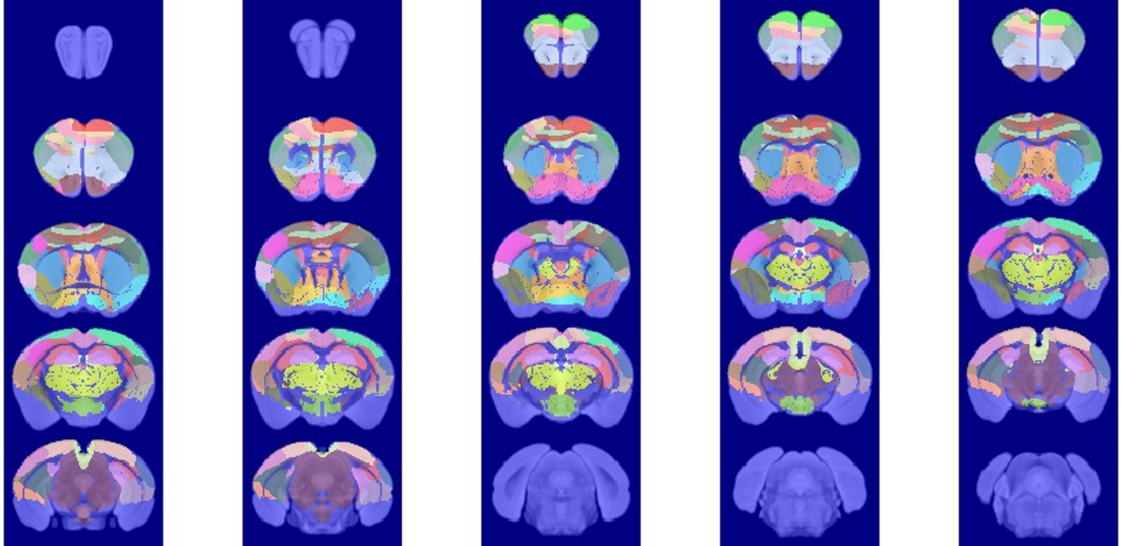
- Parcellation & Feature Engineering: Applied spectral clustering algorithms to parcellate brain regions and extracted dynamic Functional Connectivity (dFC) features using sliding-window correlation matrices from fMRI signals.
- Multi-Modal Sleep Staging: Developed and evaluated an array of machine learning models (SVM, Random Forest, MLPs) to classify NREM/REM sleep cycles, leveraging concurrent ECoG (Electrocorticography) recordings as high-fidelity ground truth labels.
- Biomarker Identification: Conducted cross-modal correlation analysis between localized fMRI signals and ECoG data to identify specific subcortical regions tightly coupled with sleep state transitions.